
Lanterns & CeremoniesEvents
The bamboo lanternsTake-doro
Light through cut bamboo,
once a year after dark
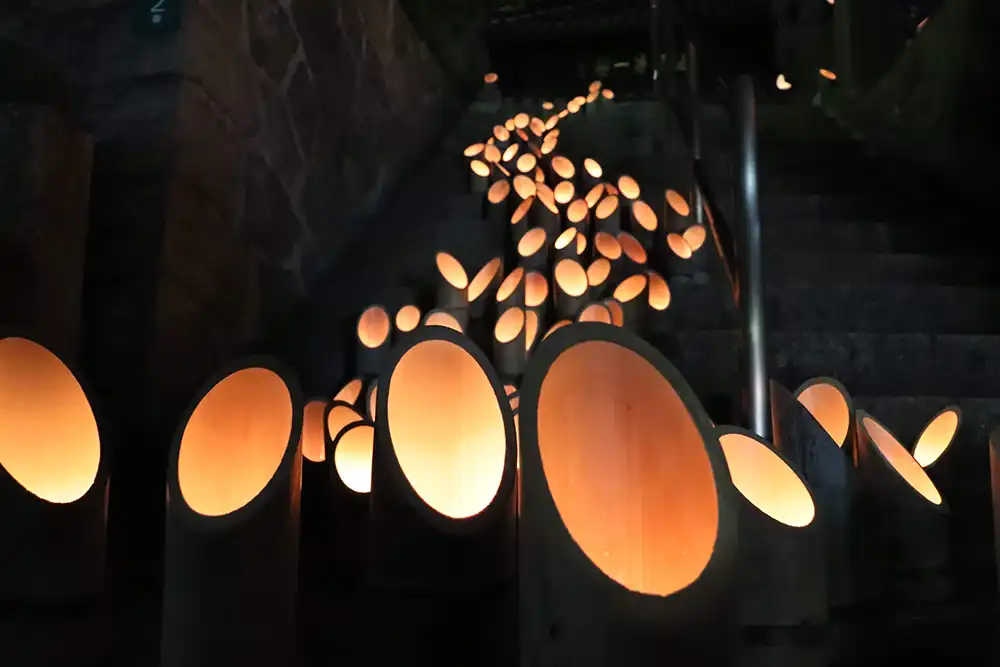
Lengths of bamboo are cut, drilled, and set out through the grounds, and a light is placed inside each one. The pattern of holes throws the light out in points across the paths and the stone figures, and the hillside stops looking like a daytime place at all.
People come, look for a while, and put their hands together. It is the largest gathering of the temple's year and, for most visitors, the reason to time a trip to Kokura for November.
The temple yearAnnual schedule
Spring Higan service
Held around the spring equinox, when day and night are equal. Families visit graves and the temple holds a memorial service for the ancestors.
Hana Matsuri
The Buddha's birthday. A small standing figure of the infant Buddha is set in a flower-covered shrine, and visitors ladle sweet tea over it.
Segaki-e, the Obon service
Obon is the summer period when the dead are said to return home. The Segaki rite offers food to the hungry ghosts — the beings nobody else feeds.
Autumn Higan service
The equinox service repeated in autumn, with the same purpose and the same visitors, half a year on.
Lantern Festival
Hundreds of lanterns lit across the grounds after sunset. The largest event of the temple's year. Dates are announced a few weeks ahead — check the Japanese news page or Instagram before travelling for it.
Ceremonies are open to visitors, but they are religious services for the temple's families rather than performances. Sit at the back, stay quiet, and follow what the people around you do.
Exact datesWhere to check
Dates shift from year to year and are announced in Japanese first. The two reliable sources are the temple's news page and its Instagram, both of which translate well in a browser.
Questions about an event?
Reservations for zazen and sutra copying, and any questions about visiting, are handled by the temple office. Write to us in English — that is completely fine. Our reply may come back in Japanese, and may take a day or two.
The form labels are in Japanese; your browser's translation feature handles them well. Your message itself can be written in English.