
History & Obaku ZenAbout Enmeiji
Kokura Castle was laid out according to a belief the domain took seriously: misfortune enters from the northeast. That direction is the kimon, the demon gate. Enmeiji was rebuilt on the hill northeast of the castle to stand in its way, and it has held that position, through fire and relocation, for more than three hundred years.
The long versionHistory
A dream in Buzen Province
The temple traces its beginning to the monk Saicho, known posthumously as Dengyo Daishi, who founded the Tendai school in Japan. On pilgrimage before his voyage to Tang China, praying for safe passage, he is said to have received a vision at Shimoge in Buzen Province, and to have built a temple at the foot of the mountain there to enshrine a great bodhisattva.
Nine hundred years followed. The buildings fell into ruin, but the lineage was never formally extinguished.
Rebuilt as the castle's guardian
Ogasawara Tadataka, second lord of Kokura Domain, granted the request of the priest Reisai and restored the abandoned temple. A full monastic complex was raised on Mount Akasaka, directly northeast of Kokura Castle, and given the name Tohokuzan Enmeiji — literally, “Northeast Mountain, Temple of Long Life.”
As the official prayer temple protecting the castle and the town below it, Enmeiji received an endowment of three hundred koku of land. The view from Mount Akasaka was called the finest in the domain, and poets and painters came for it.
Burned in the Kokura War
In the last years of the shogunate, Kokura Domain fought Choshu, and the fighting reached the hill. The complex on Mount Akasaka burned to the ground.
The statues from the Kannon hall were carried out and kept safe. Over the Meiji and Taisho periods the community rebuilt around them at the present site in Kamitomino, where the main hall stands today.
Stone figures in the groundsStatues & Monuments
Most of what you will pass on the way up is not decoration. Each figure is there for a reason.
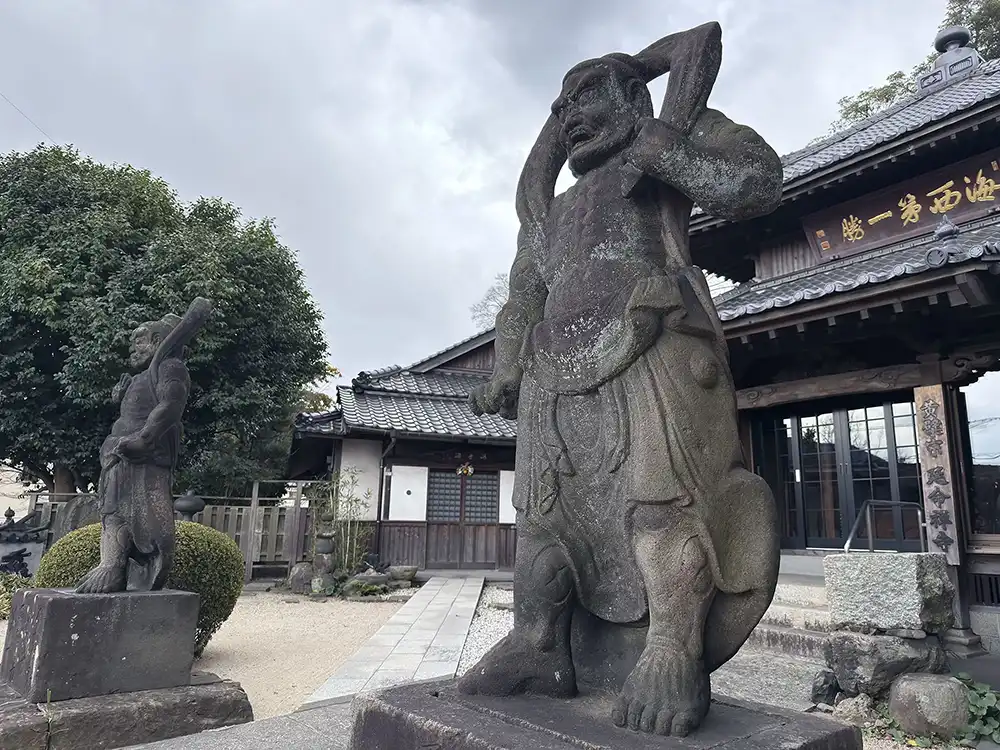
Nio (Kongo Rikishi)
The two muscular guardians glaring down from either side of the gate. One has an open mouth, sounding a; the other's is shut, sounding un. Together they are the first and last sounds, the beginning and end of all things — and a warning to anything hostile that it should not come further.
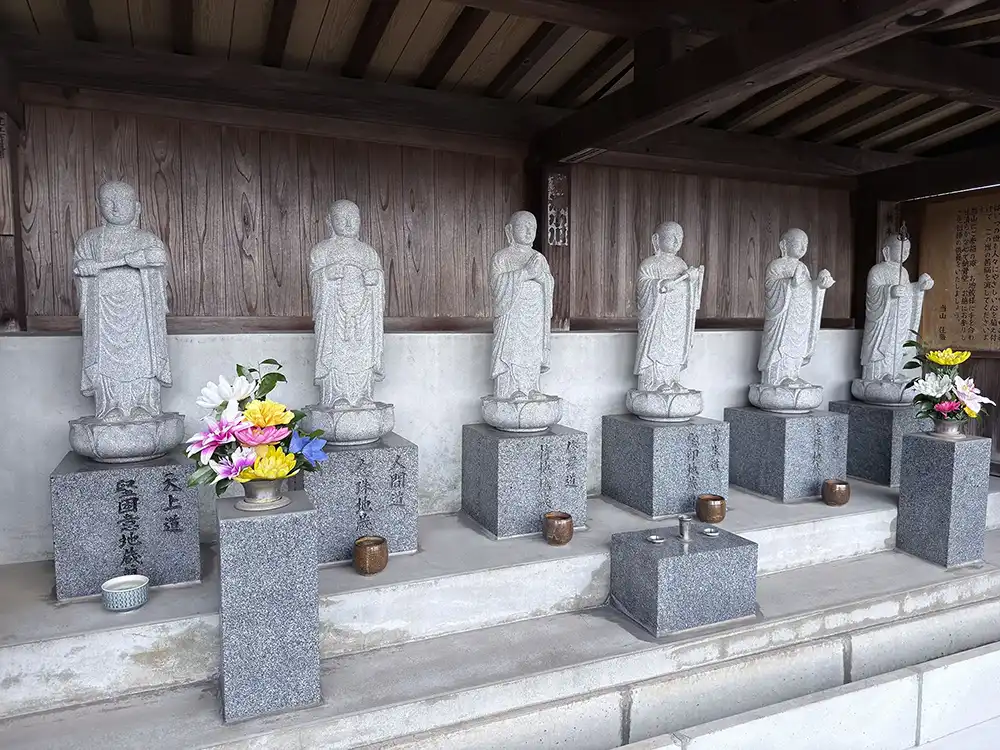
The Six Jizo
Buddhist cosmology describes six realms into which beings are reborn: hell, hungry ghosts, animals, warring spirits, humans, and heaven. One Jizo stands for each, so that no realm is left without help. The red bibs are placed by people praying for the safety of children.
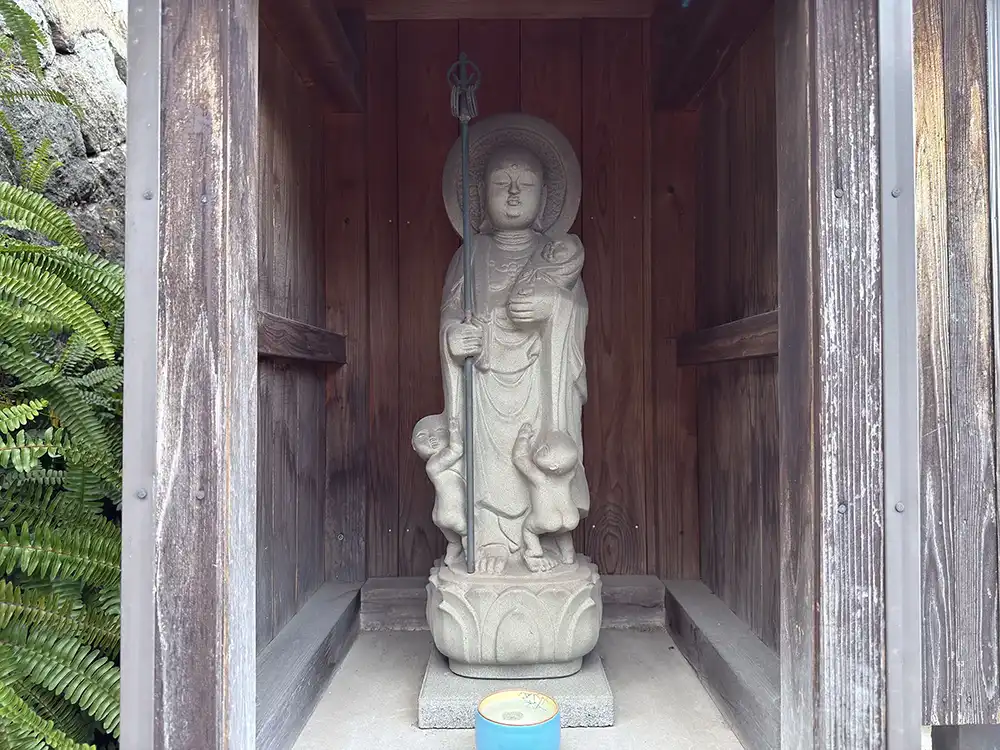
Mizuko Jizo
Dedicated to children who died before or shortly after birth. Families come here quietly, often for years. If you find offerings of toys or small clothes at the base, they were left by a parent, and the spot deserves a wide berth and a low voice.
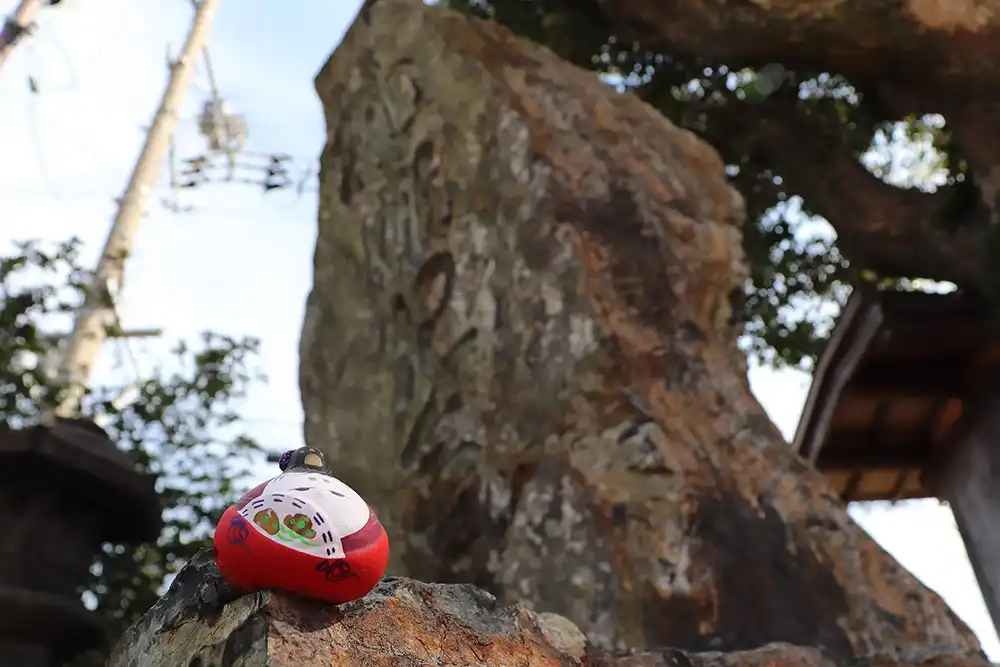
Steles and haiku stones
Scattered through the grounds are stones recording the temple's history alongside verses cut by Kokura poets. They are not translated, but they are worth noticing: each one marks something somebody thought should outlast them.
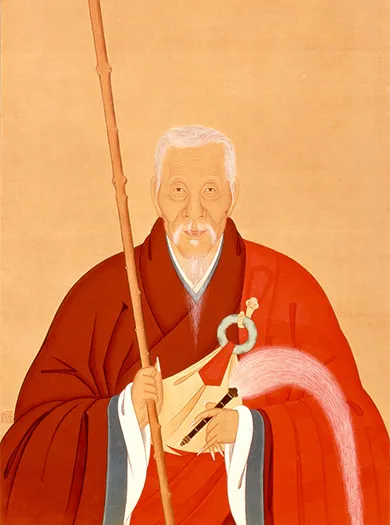
Obaku Zen
The school Enmeiji belongs to“Investigate the matter directly beneath your own feet.”
Japan has three Zen schools. Rinzai and Soto are the two most visitors have heard of. The third, Obaku, is the youngest and the most visibly Chinese: it was brought over in the early Edo period by Ingen Ryuki, a Chinese master who arrived in 1654 and never went home.
Because it arrived late and intact, Obaku kept Ming-dynasty forms that the older schools had long since adapted. Sutras are chanted in a Chinese-derived pronunciation. Ceremonies use drums and gongs, a style of musical chanting called bonbai that sounds nothing like the silence people expect of Zen. The school's vegetarian cuisine, fucha ryori, is served from shared dishes in the Chinese manner.
Underneath the ceremony, the instruction Ingen left is blunt and personal: stop looking outward and examine how you yourself are living. That question is what a session of zazen here is for.
Planning a visit?
Reservations for zazen and sutra copying, and any questions about visiting, are handled by the temple office. Write to us in English — that is completely fine. Our reply may come back in Japanese, and may take a day or two.
The form labels are in Japanese; your browser's translation feature handles them well. Your message itself can be written in English.